

Special Considerations in the Provision of Fendering
— Vessels with bulbous bows
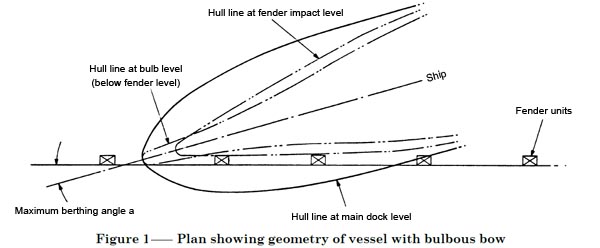
Vessels with hulls fitted with bulbous bows pose a greater collision hazard to most berth structures than vessels with a conventional forefoot design. Where such vessels are to be berthed, the underwater geometry of the bow section has to be considered in addition to that at the level of contact with the fender system. The fender spacing, fender compression and relationship of substructure to the cope face have also to be considered (see Figure 1) to establish a maximum berthing angle a which is acceptable without impact between the bulb and the berth structure. It is generally impracticable to provide a fender system to safeguard the berth structure against accidental head-on or steeply-angled impacts. Therefore the designer should establish a maximum safe value of the berthing angle that can be economically achieved having regard to both fender and substructure layout.
— Belting
Ferries, tugs, launches and other small craft are often fitted with belting that consists of one or more timber, rubber or curved steel rubbing strips around the vessel. The design of the fendering system should if appropriate take account of this belting.
Top 1 General Principles of Fendering — Provision of Fendering